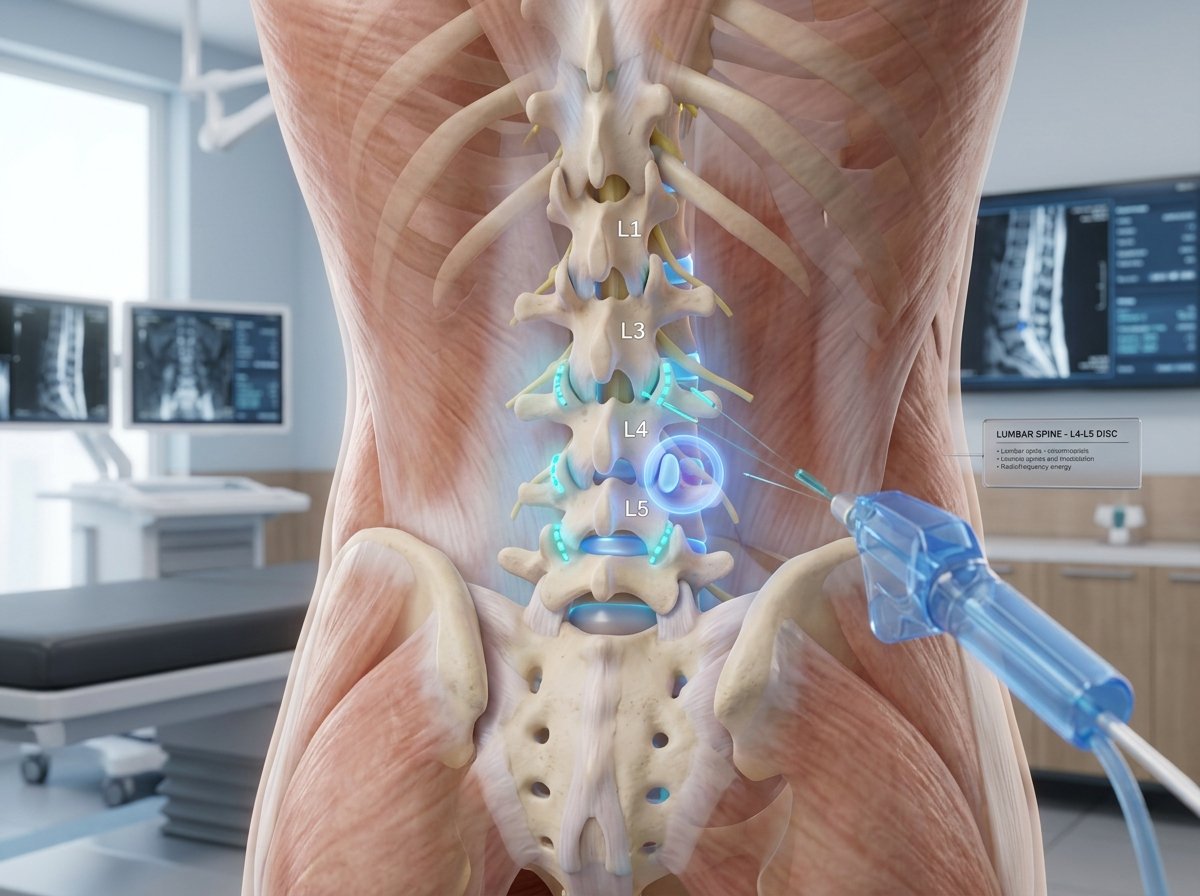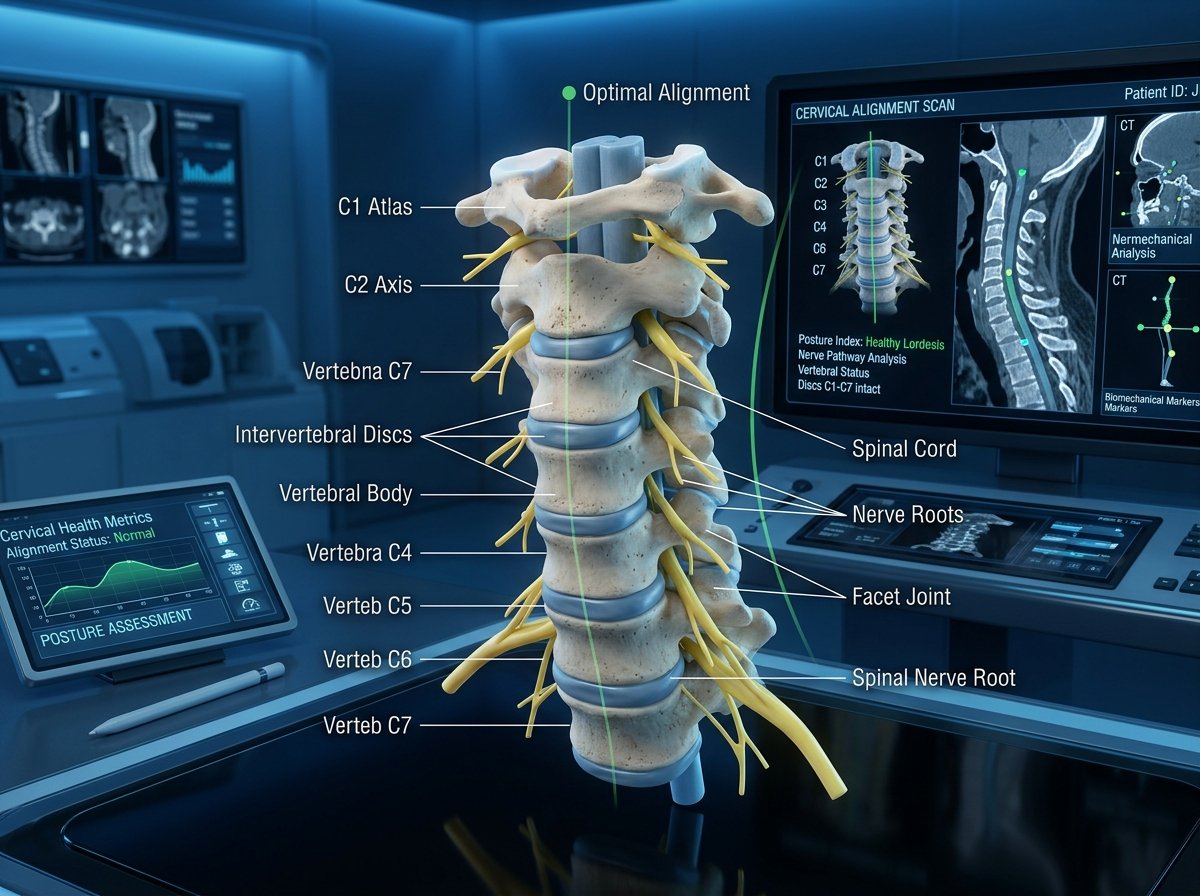

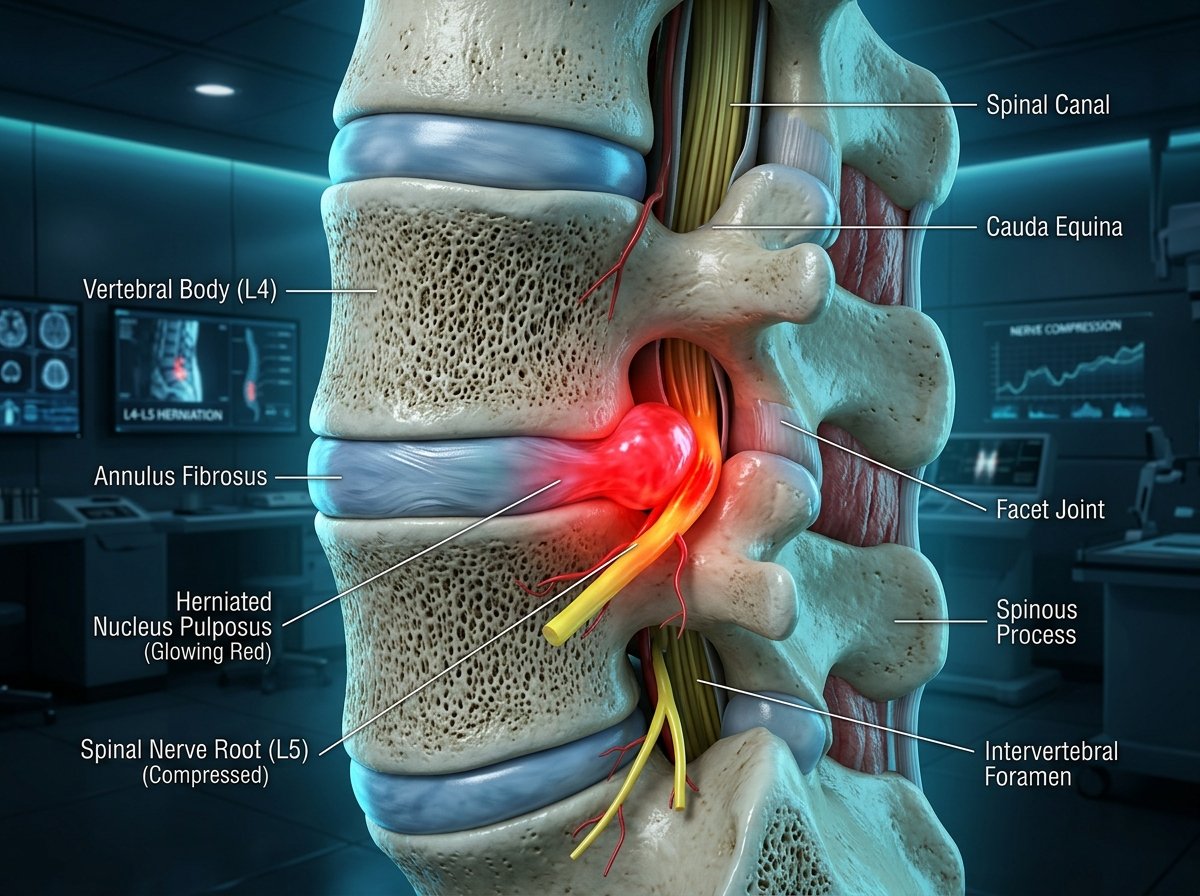
A slip disc (herniated nucleus pulposus) occurs when the soft jelly-like center of a spinal disc pushes through the outer ring. Sciatica is the resulting symptom when this herniated disc compresses or irritates the sciatic nerve root, causing shooting pain, numbness, or tingling down the buttock, thigh, and calf. Most cases respond successfully to conservative medical management and targeted spine physiotherapy without requiring surgery.
Understanding the Difference: Cause vs Symptom
It is common for patients to use "slip disc" and "sciatica" interchangeably, but medically they describe distinct concepts. A slip disc (herniation/prolapse) is the physical structural condition of the disc. Sciatica (lumbar radiculopathy) is the radiating neurological pain syndrome caused when the slipped disc impinges the adjacent nerve root.
Hallmark Symptoms to Watch Out For
Common signs that indicate nerve root compression include:
- Sharp, Electric-like Pain: Radiating pain traveling from the lower back through the buttock, hamstring, and into the foot or toes.
- Pins and Needles (Paresthesia): Tingling or numbness along specific dermatomal nerve pathways.
- Aggravation with Coughing or Sneezing: Sudden spike in shooting leg pain during Valsalva maneuvers.
- Relief with Certain Postures: Discomfort lessening when lying supine with pillows under the knees.
Modern Conservative & Minimally Invasive Options
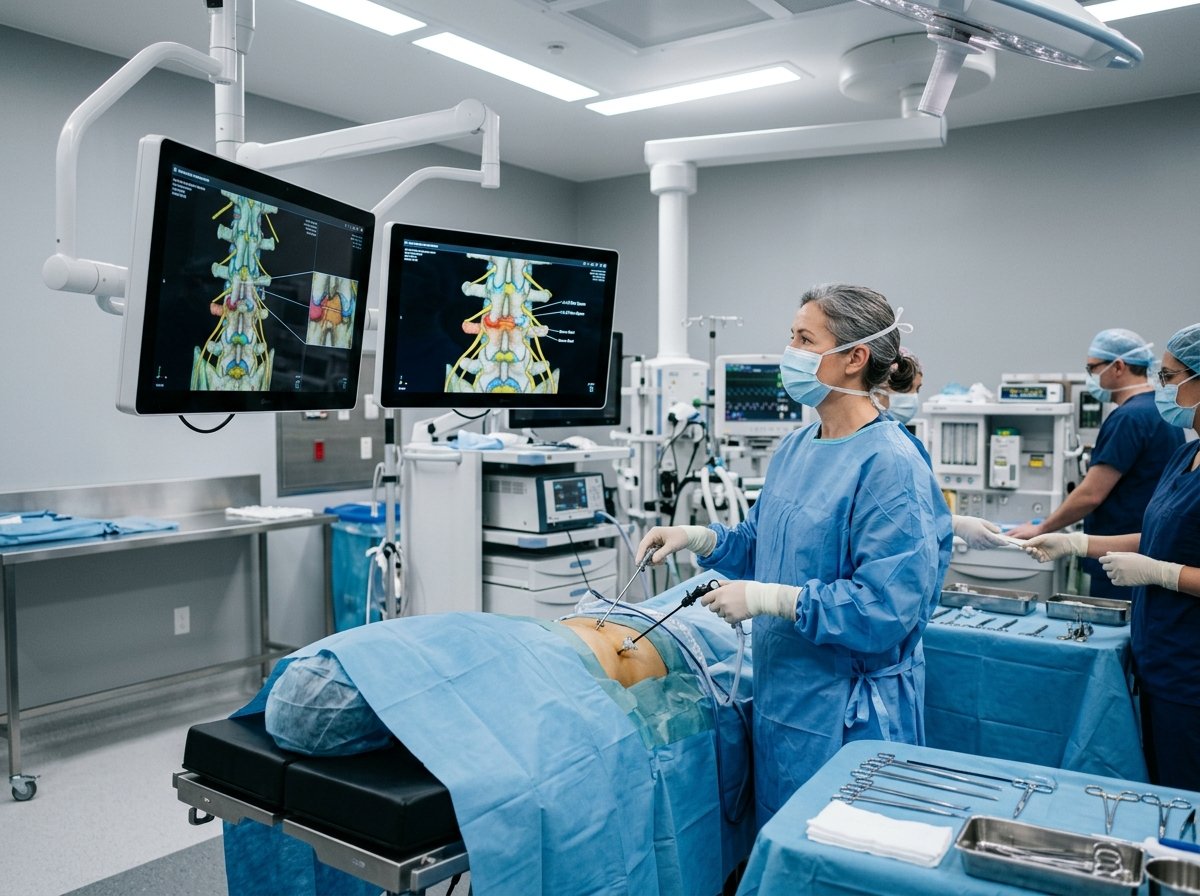
Over 85% to 90% of slip disc and sciatica cases heal successfully without major surgery. A structured, stepped approach begins with short-term anti-inflammatory medications, targeted physical therapy, nerve root blocks, and core stabilizing exercises. In cases with persistent weakness or intolerable pain, modern microdiscectomy provides rapid nerve decompression.
Doctor's Key Clinical Takeaways
- Slip disc is the mechanical condition; sciatica is the radiating nerve pain symptom.
- 90% of herniated disc cases heal with stepped conservative medical care.
- Sudden weakness in foot (foot drop) or bladder issues requires urgent surgical evaluation.
When to Seek Immediate Medical Evaluation
If back or neck pain is accompanied by sudden weakness in the legs or feet (foot drop), progressive numbness, loss of bowel/bladder control, or unremitting night pain, prompt specialist evaluation is strongly recommended.