Condition Overview & Clinical Background
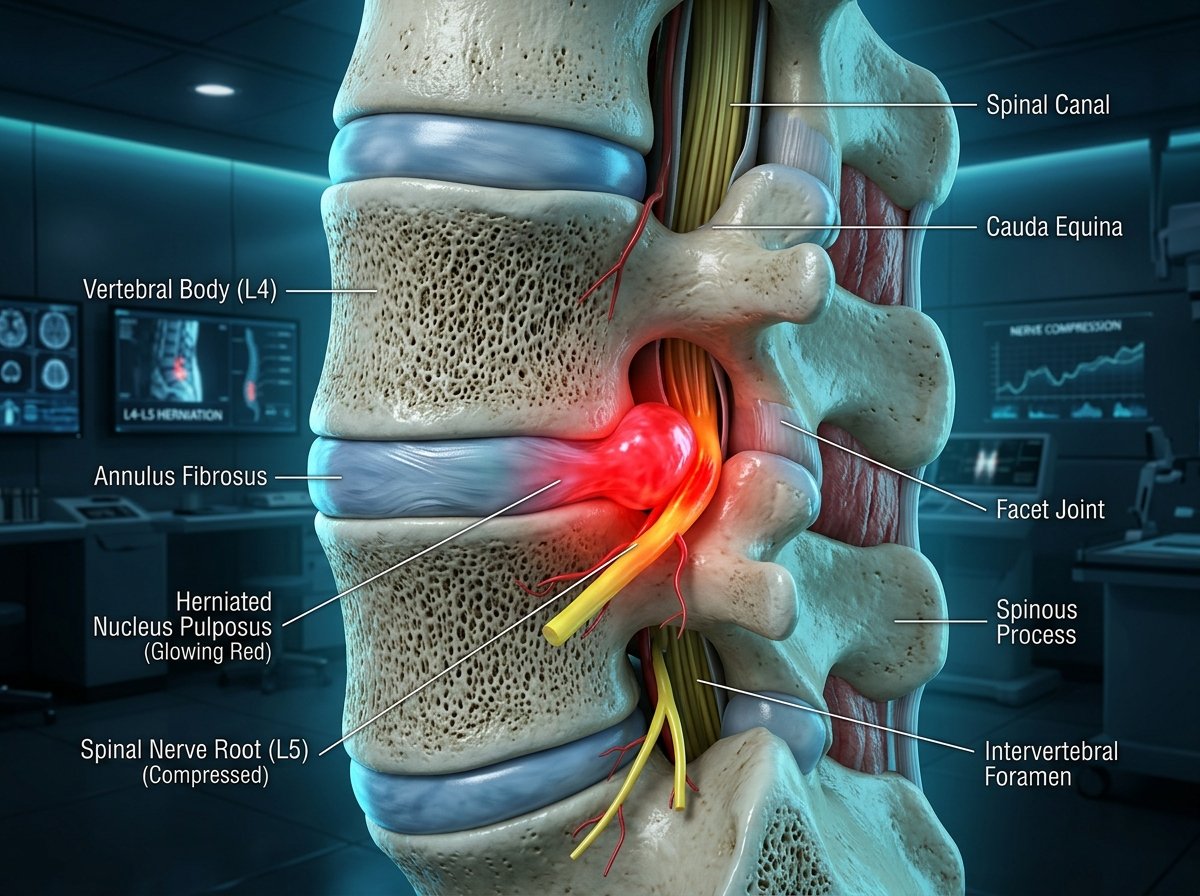
A slipped or herniated disc occurs when the soft inner gel (nucleus pulposus) pushes through a fissure in the outer fibrous wall (annulus fibrosus), compressing adjacent spinal nerve roots. This causes severe localized pain and radiating symptoms into the arms or legs. Dr. Sarthak Kadakia evaluates each disc herniation with high-precision imaging and tailors non-invasive healing protocols or micro-surgical keyhole solutions.
Dr. Sarthak Kadakia's Clinical Protocol: Every case is evaluated with individual spine biomechanics in mind. We prioritize non-surgical treatments first, reserving minimally invasive keyhole procedures for non-resolving or progressive cases.
Common Symptoms
- Sudden or worsening sharp, shooting pain traveling down the leg or arm
- Numbness, tingling, or "pins and needles" in the foot, toes, calf, or fingers
- Pain that intensifies sharply during coughing, sneezing, bending, or sitting
- Weakness in foot muscles (difficulty standing on heels or toes / foot drop)
- Inability to bend forward or walk comfortably without limping
Causes & Risk Factors
- Lifting heavy objects using back muscles instead of thigh muscles
- Sudden violent twisting or flexion movement of the lumbar or cervical spine
- Gradual weakening of the annulus fibrosus due to age and repetitive disc stress
- Excess body weight placing heightened hydrostatic pressure on lumbar discs
Diagnostic Evaluation Protocol
Stepped Treatment Approaches
Non-Surgical / Conservative Therapies
- Short-term relative rest followed by directional preference McKenzie therapy
- Neuropathic analgesics, short-course corticosteroids, and anti-inflammatory medications
- Targeted Transforaminal Epidural Steroid Injections (TFESI) under live X-ray guidance
- Progressive core stabilization and spine biomechanical re-education
Advanced & Minimally Invasive Options
- Minimally Invasive Tubular Microdiscectomy (MISS Microdiscectomy)
- Full Endoscopic Lumbar Discectomy through a tiny keyhole incision
- Microscopic decompression with preservation of posterior spinal ligaments
Recovery Timeline & Long-Term Mobility
85% to 90% of slip disc patients heal completely with conservative therapy within 6 to 8 weeks. For surgical candidates, minimally invasive microdiscectomy allows walking within hours and return to desk jobs in 10-14 days.