Condition Overview & Clinical Background
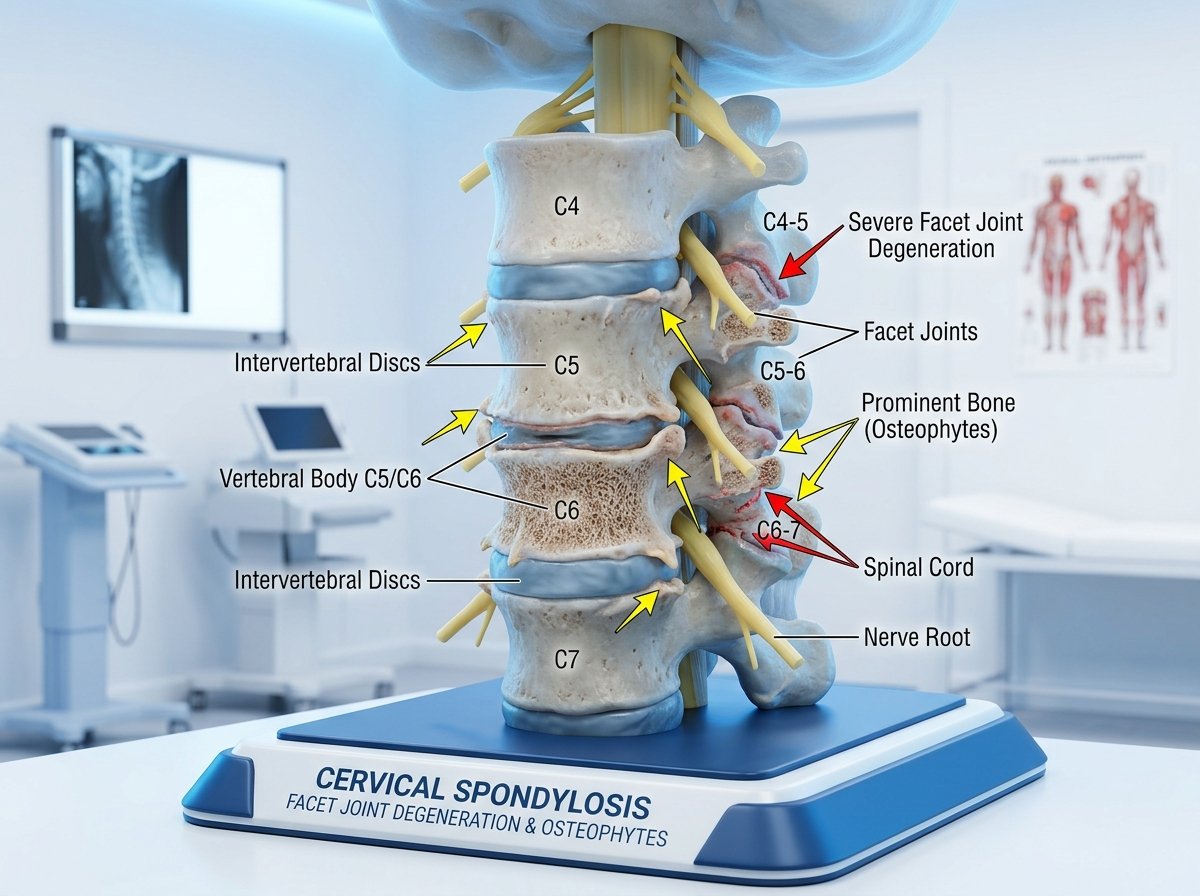
Spondylosis is an age-related degenerative condition characterized by wear and tear of the spinal discs, facet joints, and vertebral bones. It commonly affects the cervical (neck) and lumbar (lower back) spine. Over time, drying discs lose height and bone spurs (osteophytes) may develop. Dr. Sarthak Kadakia focuses on joint preservation, inflammation control, and nerve protection to restore natural flexibility and alleviate chronic discomfort.
Dr. Sarthak Kadakia's Clinical Protocol: Every case is evaluated with individual spine biomechanics in mind. We prioritize non-surgical treatments first, reserving minimally invasive keyhole procedures for non-resolving or progressive cases.
Common Symptoms
- Morning stiffness in the neck or lower back that eases with light movement
- Grinding, clicking, or cracking sound (crepitus) during neck or back movement
- Dull, aching soreness localized over the cervical or lumbar spine
- Headaches originating from the base of the skull (cervicogenic headache)
- Occasional tingling, numbness, or weakness radiating into shoulders, arms, or buttocks
Causes & Risk Factors
- Natural age-related dehydration and degeneration of intervertebral discs
- Development of bony outgrowths (bone spurs / osteophytes) narrowing neural exits
- Facet joint cartilage thinning leading to bone-on-bone friction and arthritic pain
- Repetitive occupational stress, heavy manual work, and long hours of computer use
Diagnostic Evaluation Protocol
Stepped Treatment Approaches
Non-Surgical / Conservative Therapies
- Spine-specific physical therapy focusing on neck and core muscle strengthening
- Anti-inflammatory medications and targeted chondro-protective nutritional guidance
- Fluoroscopic or ultrasound-guided facet joint injections and radiofrequency neurotomy
- Ergonomic pillow adaptation, posture correction, and regular movement breaks
Advanced & Minimally Invasive Options
- Minimally invasive foraminotomy to decompress trapped nerve roots
- Cervical or lumbar laminectomy/decompression for spinal canal narrowing
- Cervical artificial disc replacement or anterior cervical discectomy & fusion (ACDF)
Recovery Timeline & Long-Term Mobility
Consistent physical therapy and ergonomic adherence provide significant symptom relief in 3 to 6 weeks. When surgery is indicated, minimally invasive decompression offers rapid relief from nerve pain and quick recovery.