
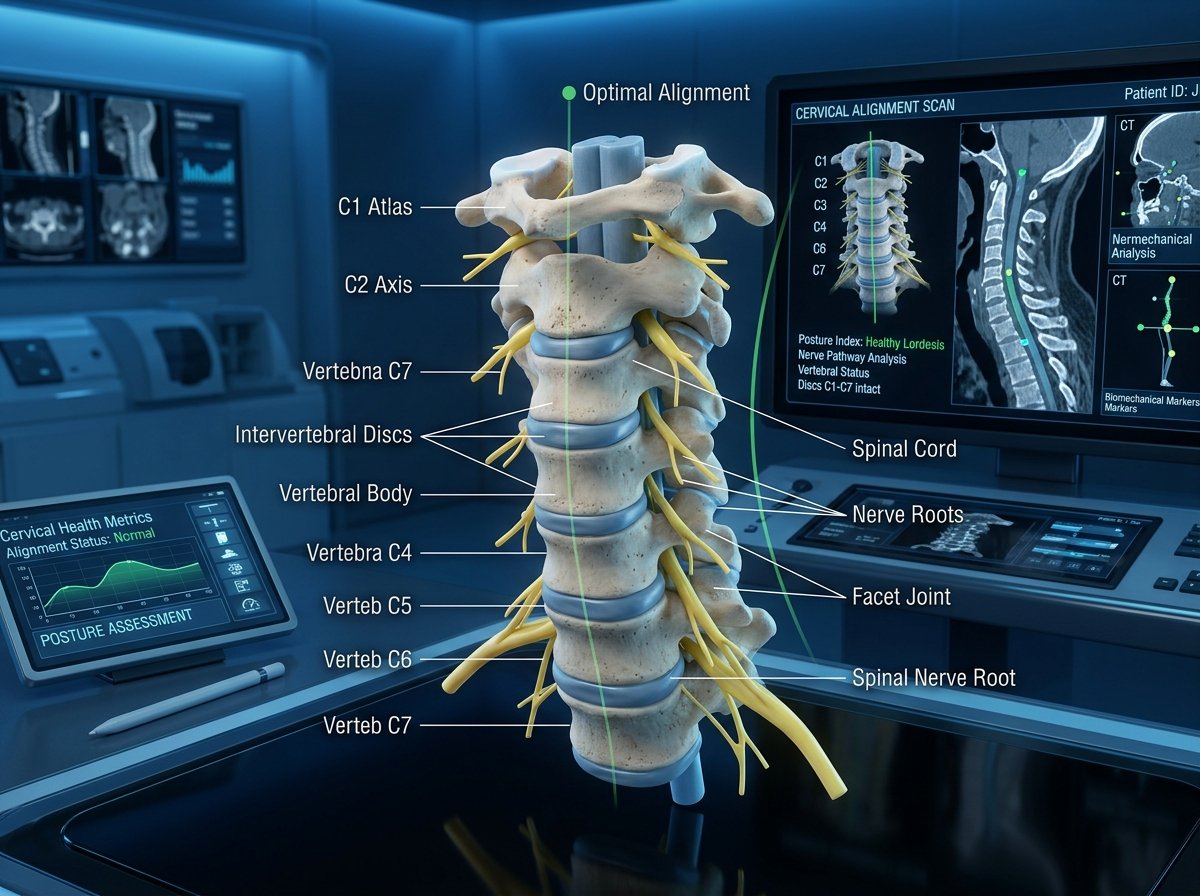
Cervical spondylosis refers to age-related or posture-induced wear and tear affecting the spinal discs in your neck. With increased screen time and "text neck" posture (holding the head tilted forward at 45-60 degrees, which multiplies neck load to 27 kg), younger professionals are experiencing neck stiffness, shoulder blade pain, headaches, and tingling in fingers. Early clinical intervention and ergonomic posture correction prevent chronic disc degeneration.
The Biomechanics of "Text Neck"
An adult human head weighs approximately 5 kg in a neutral position. Tilting your head forward at 45 degrees increases the effective gravitational strain on cervical discs to nearly 22 kg; at 60 degrees, it escalates to 27 kg. This chronic overload causes premature cervical disc thinning, facet joint arthritis, and protective muscle spasms.
Common Symptoms of Cervical Spine Strain
Signs of early cervical spondylosis and radiculopathy include:
- Stiffness and reduced range of motion when turning your neck.
- Dull aching pain radiating between the shoulder blades and upper back.
- Cervicogenic headaches originating from the base of the skull.
- Numbness, tingling, or weakness traveling down into the arm, wrist, or fingers.
Doctor's Daily Neck Care Recommendations
Bring phones and tablets up to eye level rather than looking down. Perform gentle chin tucks (retraction exercises) and scapular squeezes three times daily to strengthen deep cervical flexors.
Doctor's Key Clinical Takeaways
- Forward head tilt of 60° places up to 27 kg of static pressure on cervical vertebrae.
- Text neck is one of the leading causes of early disc wear in young working adults.
- Perform hourly chin tucks and raise devices to eye level to preserve cervical lordosis.
When to Seek Immediate Medical Evaluation
If back or neck pain is accompanied by sudden weakness in the legs or feet (foot drop), progressive numbness, loss of bowel/bladder control, or unremitting night pain, prompt specialist evaluation is strongly recommended.