Condition Overview & Clinical Background
Back pain is among the most frequent musculoskeletal complaints affecting individuals across all age groups. It can range from a dull, persistent ache to sudden, sharp radiating spasms that limit movement and disrupt daily life. Dr. Sarthak Kadakia adopts an evidence-based clinical approach that begins with precise biomechanical evaluation, identifying whether the root cause is muscular, disc-related, or structural, and prioritizing non-invasive, conservative therapies before contemplating surgery.
Dr. Sarthak Kadakia's Clinical Protocol: Every case is evaluated with individual spine biomechanics in mind. We prioritize non-surgical treatments first, reserving minimally invasive keyhole procedures for non-resolving or progressive cases.
Common Symptoms
- Dull, aching or sharp pain localized in the lower or mid-back
- Stiffness and reduced range of motion, particularly in the morning or after resting
- Pain aggravated by prolonged sitting, standing, lifting weights, or bending forward
- Muscle spasms and tightness across lumbar paraspinal muscles
- Difficulty maintaining an upright posture or walking long distances comfortably
Causes & Risk Factors
- Lumbar muscle and ligament strain from sudden lifting, twisting, or sports activities
- Degenerative disc disease causing loss of disc height and shock-absorption
- Facet joint arthritis and spinal inflammation from aging and mechanical wear
- Prolonged poor sitting posture, sedentary lifestyle, and weakened core stabilizers
- Early-stage lumbar disc bulges irritating surrounding pain-sensitive nerve endings
Diagnostic Evaluation Protocol
Stepped Treatment Approaches
Non-Surgical / Conservative Therapies
- Targeted physical therapy emphasizing core muscle activation and lumbar stabilization
- Evidence-based anti-inflammatory, neuropathic, and muscle-relaxant medications
- Fluoroscopy-guided facet joint injections and targeted epidural nerve blocks for severe flare-ups
- Ergonomic posture retraining, lumbar support optimization, and activity modification
Advanced & Minimally Invasive Options
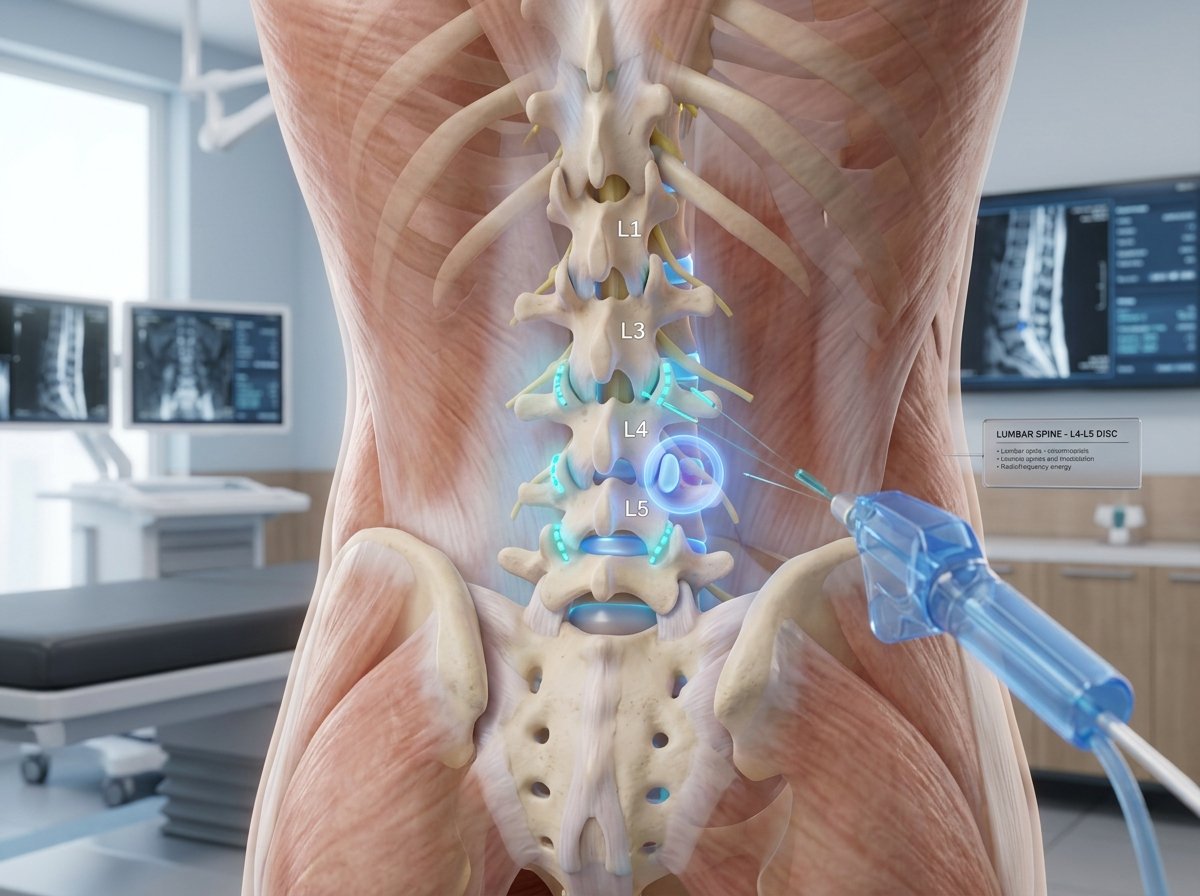
- Minimally Invasive Spine Surgery (MISS) for non-resolving mechanical or neural compression
- Keyhole microdiscectomy for persistent disc-related nerve root entrapment
- Minimally Invasive Transforaminal Lumbar Interbody Fusion (MIS-TLIF) for severe spinal instability
Recovery Timeline & Long-Term Mobility
Most acute back pain patients experience substantial relief within 2 to 4 weeks of structured conservative care. For patients undergoing modern minimally invasive procedures, same-day or next-day mobilization is standard with full recovery within 3 to 6 weeks.