Condition Overview & Clinical Background
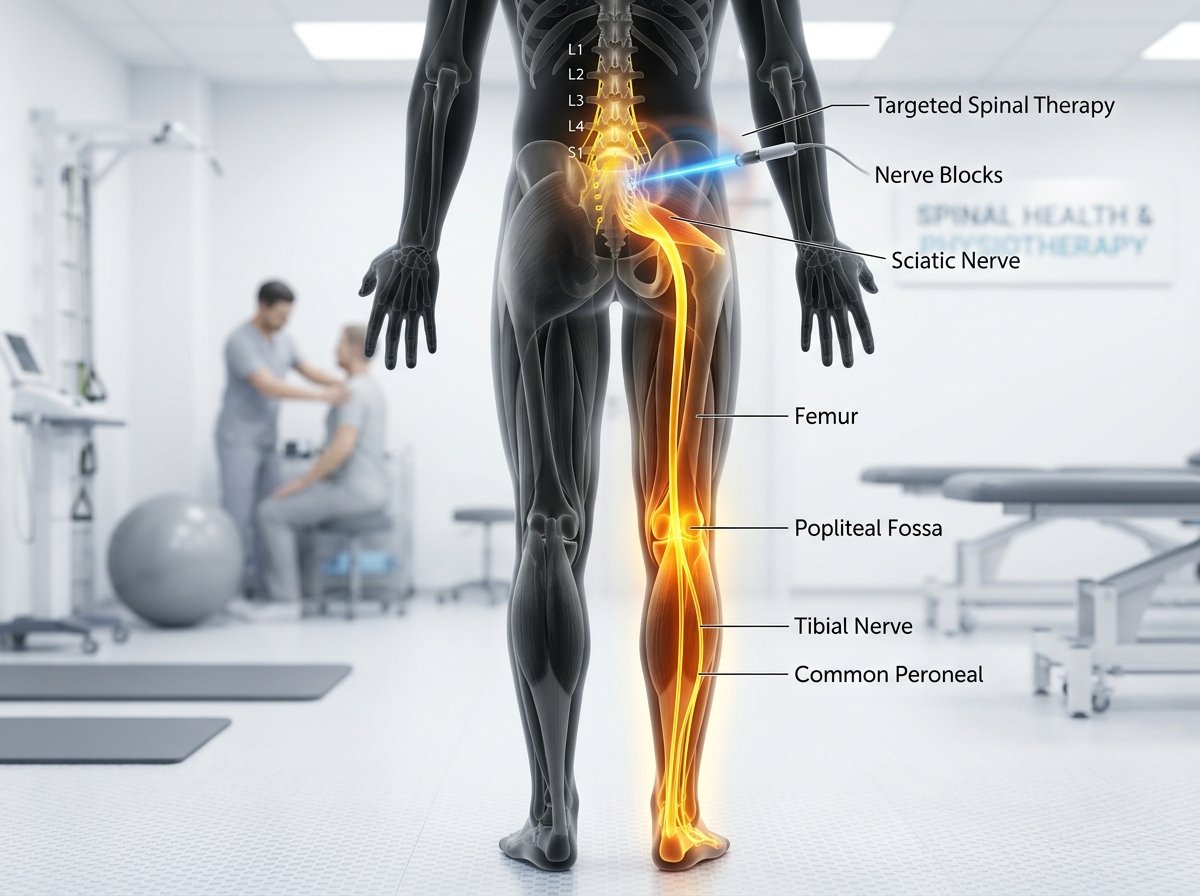
Sciatica is characterized by intense, radiating pain traveling along the path of the sciatic nerve—the longest and widest nerve in the human body. Originating in the lower back, it branches through the buttocks and travels down each leg to the feet. Dr. Sarthak Kadakia specializes in isolating the precise point of nerve impingement and relieving compression rapidly to prevent long-term nerve injury.
Dr. Sarthak Kadakia's Clinical Protocol: Every case is evaluated with individual spine biomechanics in mind. We prioritize non-surgical treatments first, reserving minimally invasive keyhole procedures for non-resolving or progressive cases.
Common Symptoms
- Sharp, burning, or electric shock-like pain originating in the lower back and radiating down the leg
- Constant numbness, tingling, or heaviness in the calf, foot, or toes
- Pain that worsens dramatically upon sitting, standing up, or walking short distances
- Difficulty lifting the foot or moving the ankle normally due to motor weakness
- Persistent one-sided leg discomfort disrupting sleep and daily mobility
Causes & Risk Factors
- Lumbar herniated disc compressing the L4, L5, or S1 nerve roots
- Lumbar spinal stenosis narrowing the spinal canal through which nerves travel
- Degenerative lumbar spondylolisthesis (vertebral slippage pinching the nerve)
- Piriformis muscle hypertrophy or spasm irritating the underlying sciatic nerve trunk
Diagnostic Evaluation Protocol
Stepped Treatment Approaches
Non-Surgical / Conservative Therapies
- Selective Nerve Root Block (SNRB) / transforaminal epidural injection for immediate swelling control
- Specialized neural mobilization ("nerve flossing") physical therapy
- Targeted neuropathic pain modulators and anti-inflammatory prescriptions
- Ergonomic seating adjustments and lumbar lordosis support cushions
Advanced & Minimally Invasive Options
- Minimally invasive keyhole microdiscectomy decompressing the pinched nerve root
- Endoscopic laminoforaminotomy with minimal bone resection
- Minimally invasive decompression and stabilization if vertebral slippage is present
Recovery Timeline & Long-Term Mobility
Targeted nerve root injections or conservative care frequently resolve acute sciatica within 3 to 6 weeks. Post-operative recovery from keyhole microdecompression enables patients to resume light activities within 1 to 2 weeks.