Condition Overview & Clinical Background
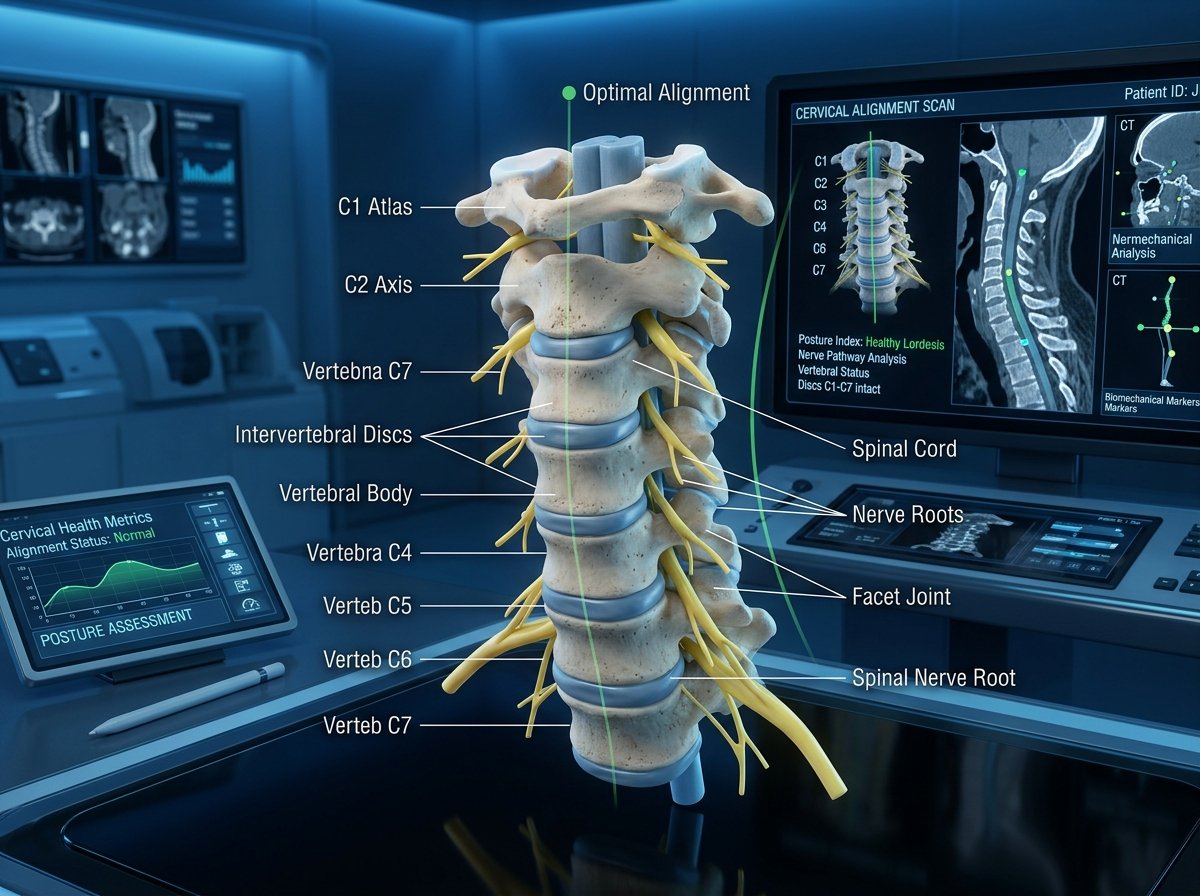
The cervical spine (C1-C7) supports the weight of the head while allowing extensive rotational and tilting mobility. Disorders in this delicate area can compress nerve roots branching into the arms (Cervical Radiculopathy) or compress the spinal cord itself (Cervical Myelopathy). Dr. Sarthak Kadakia evaluates cervical conditions with precision imaging and delivers specialized non-surgical care or motion-preserving surgical options.
Dr. Sarthak Kadakia's Clinical Protocol: Every case is evaluated with individual spine biomechanics in mind. We prioritize non-surgical treatments first, reserving minimally invasive keyhole procedures for non-resolving or progressive cases.
Common Symptoms
- Persistent neck stiffness, limited head rotation, and upper trapezius muscle spasms
- Sharp, electric shooting pain radiating down the arm into the fingers (Radiculopathy)
- Tingling, numbness, or loss of sensation in the thumb, index, or little finger
- Weakness in grip strength, difficulty opening bottles, or dropping items unintentionally
- Unsteadiness when walking, feeling off-balance, or stiffness in both legs (Cervical Myelopathy)
Causes & Risk Factors
- Cervical disc prolapse (frequently at C5-C6 and C6-C7 levels) compressing nerve roots
- Cervical bone spurs (osteophytes) narrowing the neural exit foramina
- Chronic forward-head tilt posture from prolonged laptop and smartphone usage ("Tech Neck")
- Cervical spinal cord compression caused by ossification of posterior longitudinal ligament (OPLL)
Diagnostic Evaluation Protocol
Stepped Treatment Approaches
Non-Surgical / Conservative Therapies
- Cervical isometric strengthening, scapular stabilization, and postural physical therapy
- Short-course anti-inflammatory medications and neuropathic pain management
- Ultrasound or fluoroscopy-guided cervical selective nerve root blocks (SNRB)
- Ergonomic workstation adjustments (screen height, chair lumbar-cervical alignment)
Advanced & Minimally Invasive Options
- Anterior Cervical Discectomy and Fusion (ACDF) - the gold standard for cervical disc disease
- Cervical Artificial Disc Replacement (Arthroplasty) to maintain natural neck flexibility
- Posterior cervical foraminotomy / laminoplasty for multi-level spinal canal expansion
Recovery Timeline & Long-Term Mobility
Conservative management successfully resolves over 85% of cervical radiculopathy cases within 4 to 6 weeks. Patients undergoing ACDF or disc replacement typically experience immediate arm pain relief, leave the hospital in 24 hours, and return to light work in 2 weeks.