Condition Overview & Clinical Background
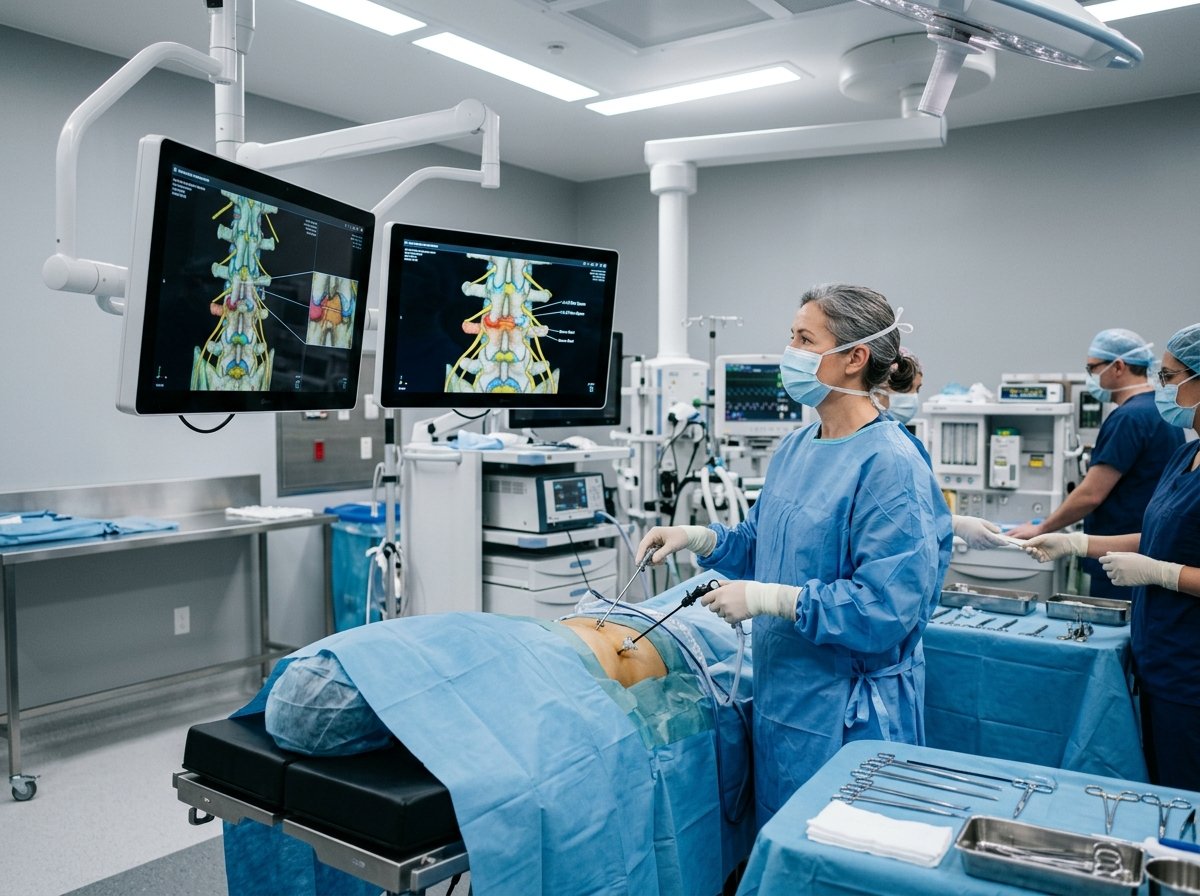
Minimally Invasive Spine Surgery (MISS) is a breakthrough surgical technique designed to treat spinal disorders through tiny incisions (often 1.5 to 2 cm) without cutting or detaching healthy back muscles. Utilizing specialized tubular dilators, high-magnification surgical operating microscopes, and high-definition endoscopes, Dr. Sarthak Kadakia accomplishes the exact same therapeutic goals as traditional open surgery with significantly less trauma, minimal blood loss, and rapid healing.
Dr. Sarthak Kadakia's Clinical Protocol: Every case is evaluated with individual spine biomechanics in mind. We prioritize non-surgical treatments first, reserving minimally invasive keyhole procedures for non-resolving or progressive cases.
Common Symptoms
- Severe, debilitating leg or arm pain that has failed conservative treatment over 6-8 weeks
- Progressive neurological weakness such as foot drop or loss of hand motor strength
- Severe spinal stenosis preventing the patient from walking more than a few minutes
- Spinal instability or spondylolisthesis causing chronic disabling pain and neural entrapment
Causes & Risk Factors
- Herniated lumbar or cervical intervertebral discs unresponsive to conservative therapies
- Severe degenerative lumbar spinal canal stenosis
- Spondylolisthesis (vertebral displacement) requiring neural decompression and stabilization
- Spinal fractures or tumors requiring targeted, tissue-sparing stabilization
Diagnostic Evaluation Protocol
Stepped Treatment Approaches
Non-Surgical / Conservative Therapies
- MISS is offered when non-surgical treatments (physiotherapy, injections, medication) have failed
- Pre-operative core conditioning to optimize post-operative rehabilitation success
- Detailed pre-surgical counseling and radiographic review with Dr. Sarthak Kadakia
Advanced & Minimally Invasive Options
- Microscopic Tubular Lumbar Discectomy for herniated slip discs
- Endoscopic Spine Decompression for spinal stenosis and nerve root impingement
- Minimally Invasive Transforaminal Lumbar Interbody Fusion (MIS-TLIF)
- Percutaneous Pedicle Screw Instrumentation through tiny puncture incisions
Recovery Timeline & Long-Term Mobility
Patients typically stand and walk within hours of surgery under physiotherapist guidance. Most patients are discharged within 24 to 48 hours, resume desk work in 1 to 2 weeks, and return to full active life within 4 to 6 weeks.