Condition Overview & Clinical Background
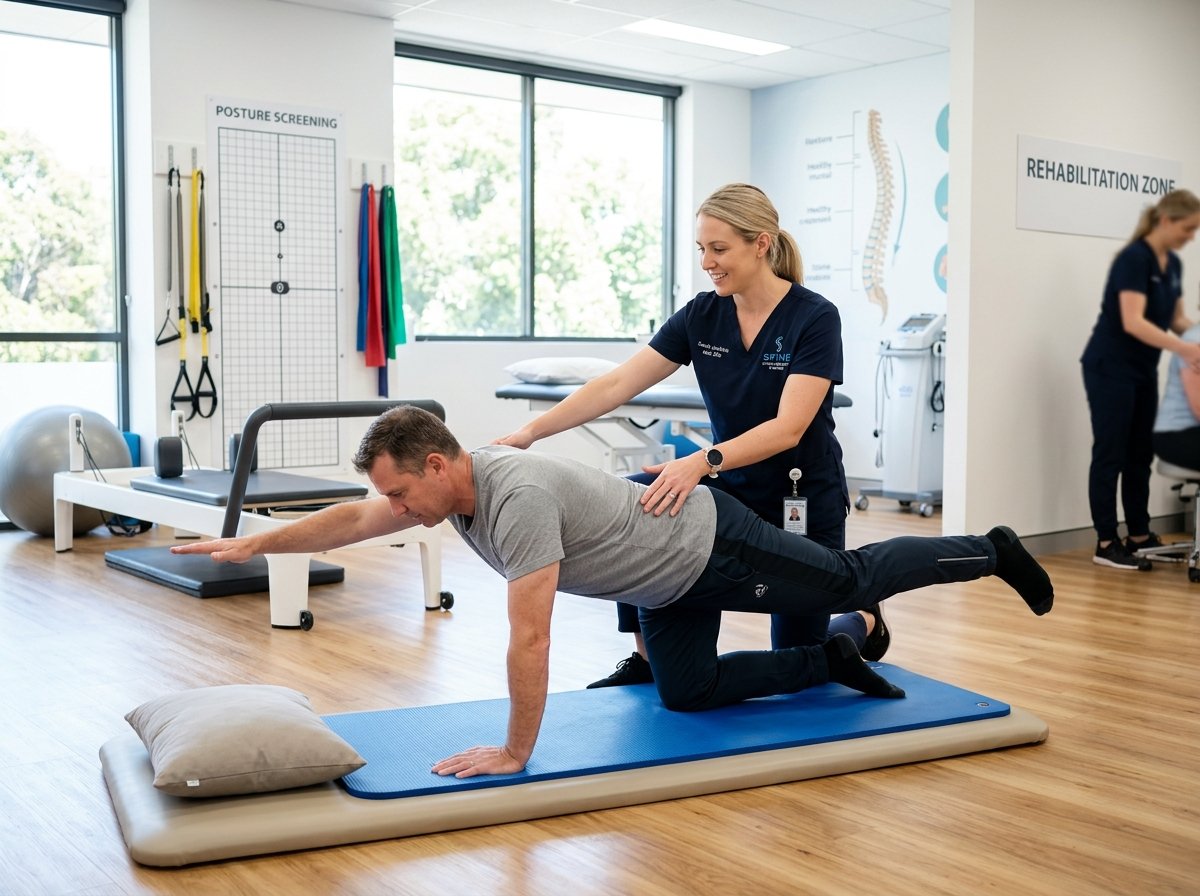
Spine rehabilitation is an essential pillar of comprehensive spine care. True recovery involves not only eliminating acute pain, but restoring muscular support, postural endurance, and ergonomic awareness to safeguard the spine against future recurrences. Dr. Sarthak Kadakia prescribes structured, phased rehabilitation programs individually tailored for non-surgical recovery as well as post-operative conditioning.
Dr. Sarthak Kadakia's Clinical Protocol: Every case is evaluated with individual spine biomechanics in mind. We prioritize non-surgical treatments first, reserving minimally invasive keyhole procedures for non-resolving or progressive cases.
Common Symptoms
- Post-operative recovery following microdiscectomy, decompression, or spinal fusion
- Persistent muscular weakness or fear of movement following an acute back or neck pain flare-up
- Poor postural endurance and fatigue during daily desk work or household activities
- Desire to safely resume sports, gym workouts, yoga, or running after a spine condition
Causes & Risk Factors
- Deconditioned core musculature and spinal stabilizer atrophy following pain episodes
- Improper lifting, bending, and sitting biomechanics placing chronic strain on discs
- Sedentary lifestyle and prolonged sitting creating muscular imbalances and tightness
- Incomplete rehabilitation following previous spine episodes leading to recurrent injuries
Diagnostic Evaluation Protocol
Stepped Treatment Approaches
Non-Surgical / Conservative Therapies
- Phase 1: Pain modulation, gentle spinal decompression stretches, and neural glide techniques
- Phase 2: Deep core muscle isometric activation and pelvic stability re-education
- Phase 3: Dynamic multi-planar functional strengthening, squat/bend mechanics, and resistance training
- Phase 4: Ergonomic workstation customization, daily maintenance home exercise regimen, and sports conditioning
Advanced & Minimally Invasive Options
- Rehabilitation is a non-surgical therapy; for surgical patients, structured post-operative protocols begin on Day 1
Recovery Timeline & Long-Term Mobility
Patients notice measurable improvements in stamina, flexibility, and confidence within 2 to 4 weeks, with lifelong benefits when home exercises and ergonomic habits are maintained.