Condition Overview & Clinical Background
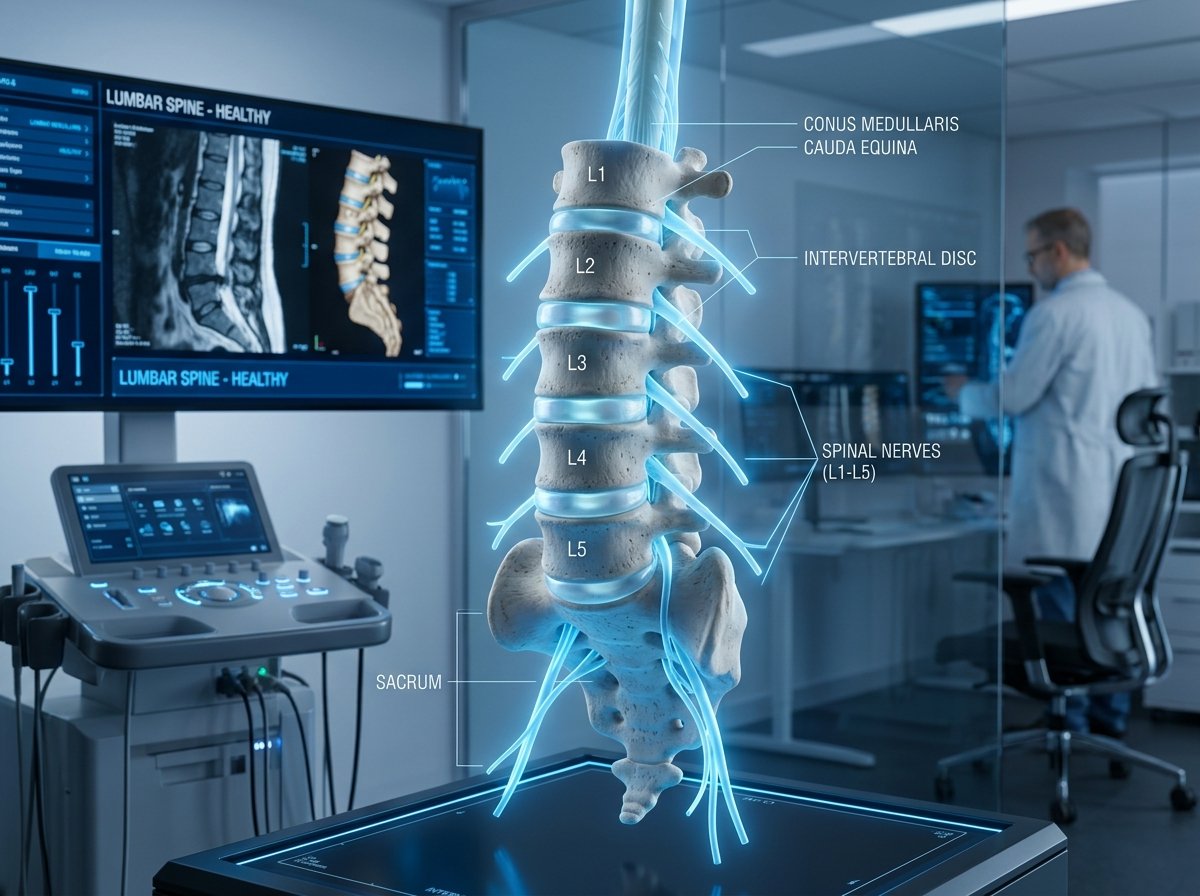
The lumbar spine (L1-L5 vertebrae) supports the upper body's weight and permits crucial motions including bending, twisting, and walking. Lumbar spinal conditions such as spinal canal stenosis, degenerative spondylolisthesis, and facet arthropathy frequently cause severe walking limitations and lower back disability. Dr. Sarthak Kadakia offers specialized diagnostics and minimally invasive solutions to restore pain-free walking.
Dr. Sarthak Kadakia's Clinical Protocol: Every case is evaluated with individual spine biomechanics in mind. We prioritize non-surgical treatments first, reserving minimally invasive keyhole procedures for non-resolving or progressive cases.
Common Symptoms
- Heaviness, cramping, or numbness in both legs that worsens when walking (Neurogenic Claudication)
- Relief of leg discomfort when sitting down or bending forward ("Shopping Cart Sign")
- Chronic aching in the lower back aggravated by prolonged standing or hyperextension
- Morning stiffness and difficulty straightening up from a seated position
- Weakness in leg muscles and reduced stamina during routine walking
Causes & Risk Factors
- Lumbar canal stenosis due to thickened ligamentum flavum and facet joint osteophytes
- Degenerative lumbar spondylolisthesis (slippage of one vertebra over another)
- Lumbar facet joint arthrosis from chronic cartilage breakdown
- Segmental instability and loss of lumbar disc lordosis
Diagnostic Evaluation Protocol
Stepped Treatment Approaches
Non-Surgical / Conservative Therapies
- Lumbar flexion-biased physical therapy and deep core muscle reconditioning
- Fluoroscopy-guided epidural steroid injections (translaminar or caudal) for stenosis pain
- Medial branch radiofrequency ablation (RFA) for chronic facet joint arthritis pain
- Structured walking programs, weight management, and ergonomic lumbar supports
Advanced & Minimally Invasive Options
- Minimally Invasive Lumbar Decompression (Over-the-top keyhole bilateral decompression)
- Minimally Invasive Transforaminal Lumbar Interbody Fusion (MIS-TLIF)
- Percutaneous pedicle screw fixation with minimal soft tissue disruption
Recovery Timeline & Long-Term Mobility
Non-surgical injections and physical therapy provide substantial walking improvements. Following minimally invasive lumbar decompression, patients typically walk without leg pain on the same day and return home within 24 to 48 hours.